Mastering Quarter Hours: A Critical Time-Telling Milestone
Quarter past and quarter to represent a significant leap in time-telling complexity. These concepts require understanding fractions, precise hand positions, and alternative time expressions. This comprehensive guide provides everything you need to teach quarter hours effectively and help students master this essential skill.
Why Quarter Hours Are Important
Quarter hour concepts are crucial because they:
- Build Fraction Understanding: Connect time to mathematical fractions (1/4 of an hour)
- Develop Precision: Require more exact hand position recognition
- Enable Real-World Application: Many schedules use quarter-hour intervals
- Bridge to 5-Minute Intervals: Serve as stepping stone to complete mastery
- Enhance Mathematical Thinking: Strengthen number sense and pattern recognition
Prerequisites: What Students Need First
Before teaching quarter hours, ensure students have mastered:
- ✓ Whole hours (1:00, 2:00, 3:00) with 90%+ accuracy
- ✓ Half hours (1:30, 2:30, 3:30) confidently
- ✓ Understanding that the hour hand moves gradually
- ✓ Counting by fives to at least 45
- ✓ Basic fraction concepts (half, quarter)
- ✓ Number recognition through 12
Understanding Quarter Hours: The Foundation
What Is a Quarter Hour?
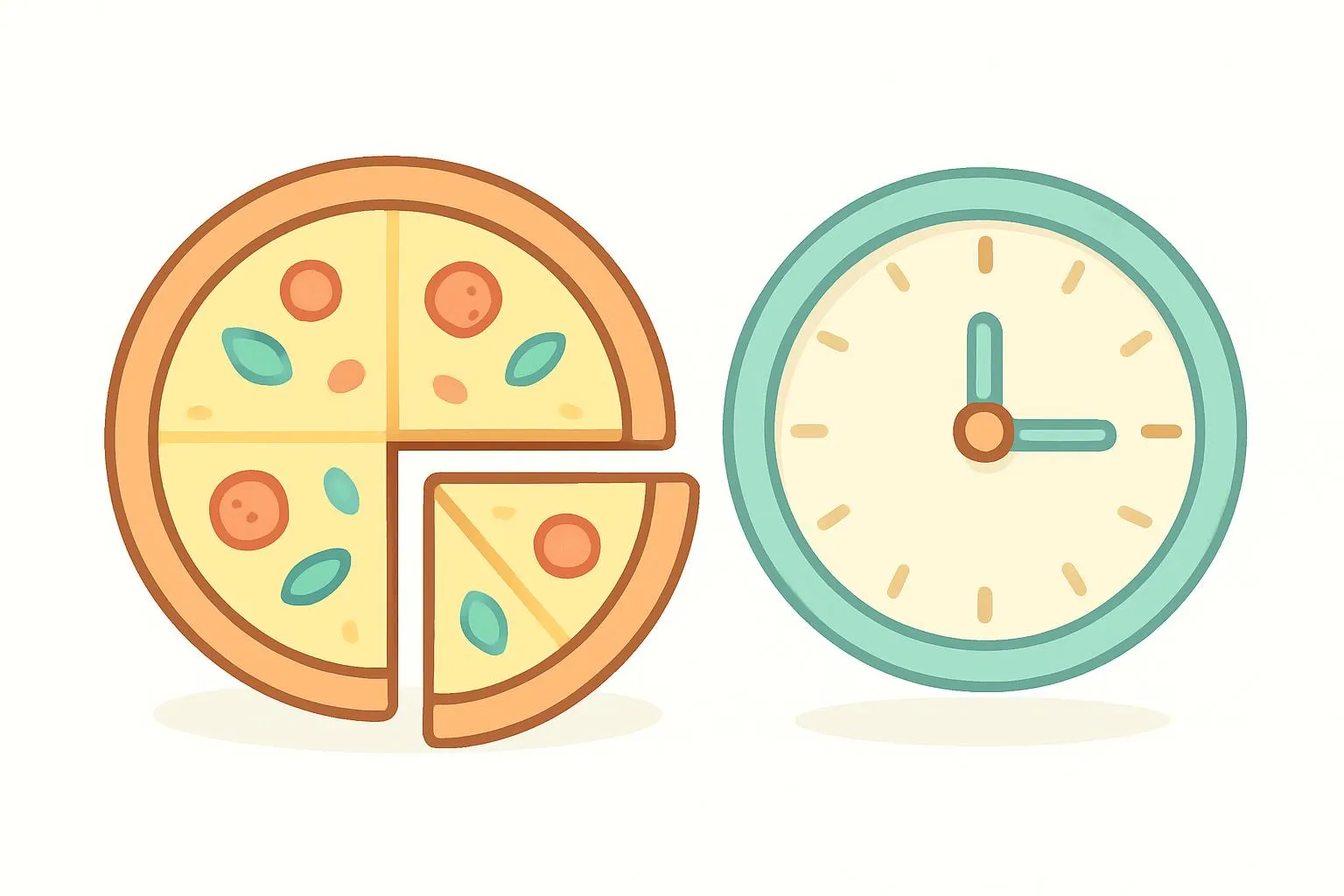
A quarter hour is 15 minutes, or one-fourth (1/4) of an hour. Since an hour has 60 minutes, a quarter is 60 ÷ 4 = 15 minutes.
Visual Representation:
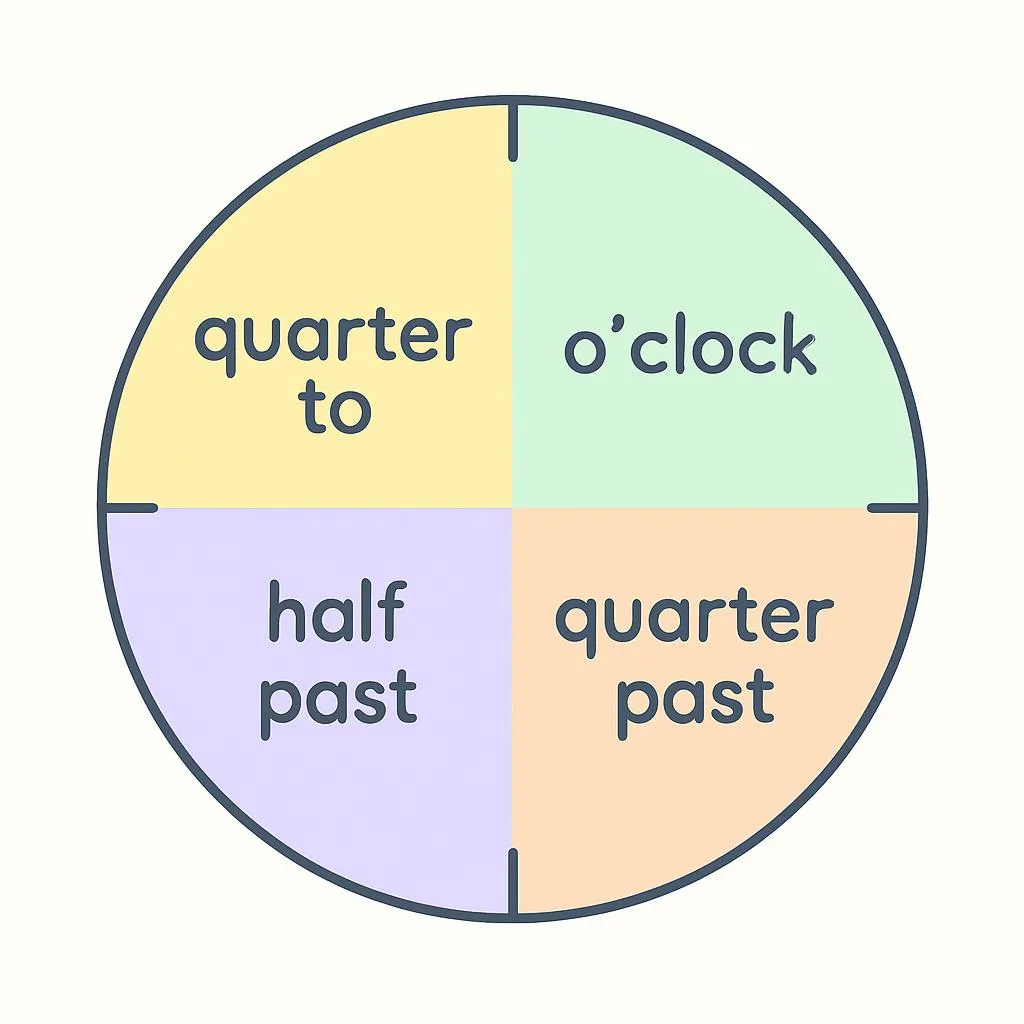
Create a visual showing a clock divided into four equal parts:
- First Quarter: 12 to 3 (0-15 minutes) = Quarter Past
- Second Quarter: 3 to 6 (15-30 minutes) = Half Past
- Third Quarter: 6 to 9 (30-45 minutes) = Quarter To
- Fourth Quarter: 9 to 12 (45-60 minutes) = O'Clock
Teaching Quarter Past (15 Minutes)
Step 1: Introduce the Concept
Explanation: "When the minute hand points to the 3, it's 15 minutes past the hour. We call this 'quarter past' because it's one quarter of the way around the clock."
Visual Aid: Use a clock with the face divided into four colored sections. Highlight the first quarter (12 to 3) in one color.
Step 2: Connect to Counting by Fives
Show students that the 3 represents 15 minutes:
- Point to 1: "5 minutes"
- Point to 2: "10 minutes"
- Point to 3: "15 minutes"
Key Phrase: "When the minute hand reaches the 3, we've counted three fives: 5, 10, 15!"
Step 3: Teach Multiple Expressions
Show that the same time can be expressed different ways:
- Digital Format: 3:15
- Spoken Format: "Three fifteen"
- Quarter Language: "Quarter past three"
- Minutes Format: "Fifteen minutes past three"
Start Simple: Begin with digital format (3:15) before introducing "quarter past" language.
Step 4: Practice Hour Hand Position
Critical Point: At quarter past, the hour hand is one-quarter of the way between numbers.
Example: At 3:15, the hour hand is between 3 and 4, closer to 3.
Activity: Show various quarter past times and have students identify where the hour hand should be positioned.
Activities for Quarter Past:
1. Quarter Past Matching
- Match analog clocks showing :15 to digital times
- Match written "quarter past" phrases to clock faces
- Use worksheets from our generator
2. Draw the Hands
- Provide blank clock faces
- Call out "quarter past 2" or "7:15"
- Students draw both hands correctly
3. Quarter Past Bingo
- Bingo cards with various quarter past times
- Call times in different formats
- Students mark matching clocks
Teaching Quarter To (45 Minutes)
Step 1: Introduce the Concept
Explanation: "When the minute hand points to the 9, it's 45 minutes past the hour, or 15 minutes before the next hour. We call this 'quarter to' because we're one quarter away from the next hour."
Important: Quarter to is more challenging because it references the NEXT hour, not the current one.
Step 2: Connect to Counting
Show that the 9 represents 45 minutes:
- Count by fives around the clock: 5, 10, 15, 20, 25, 30, 35, 40, 45
- The minute hand at 9 = 45 minutes
Step 3: Teach Multiple Expressions
Example with 2:45:
- Digital Format: 2:45
- Spoken Format: "Two forty-five"
- Quarter Language: "Quarter to three" (note: references 3, not 2!)
- Minutes Format: "Forty-five minutes past two" OR "Fifteen minutes to three"
Teaching Tip: Start with digital format (2:45) and master it before introducing "quarter to" language.
Step 4: Understanding "To" Language
This is the most challenging aspect. Use these strategies:
Strategy 1: Visual Division
- Divide clock vertically through 12 and 6
- Right side (12-6) = "Past" the hour
- Left side (6-12) = "To" the next hour
Strategy 2: The Next Hour Rule
- "When we say 'quarter to,' we name the hour we're heading toward"
- "At 2:45, we're heading to 3 o'clock, so it's quarter to 3"
- Practice identifying "What hour are we heading toward?"
Strategy 3: Make It Optional
- For young learners, "2:45" or "two forty-five" is sufficient
- "Quarter to" language can be introduced later
- Don't require it for assessment if it causes confusion
Activities for Quarter To:
1. Hour Hand Detective
- Show clocks at :45
- Students identify: "Which two numbers is the hour hand between?"
- Emphasize: "We use the smaller number for the time"
2. Past or To?
- Show various times
- Students determine if they're "past" or "to" times
- Sort times into two categories
3. Translation Practice
- Give digital time (2:45)
- Students write in "quarter to" format (quarter to 3)
- Practice both directions
Teaching Both Together: Integration Strategies
Comparison Activities:
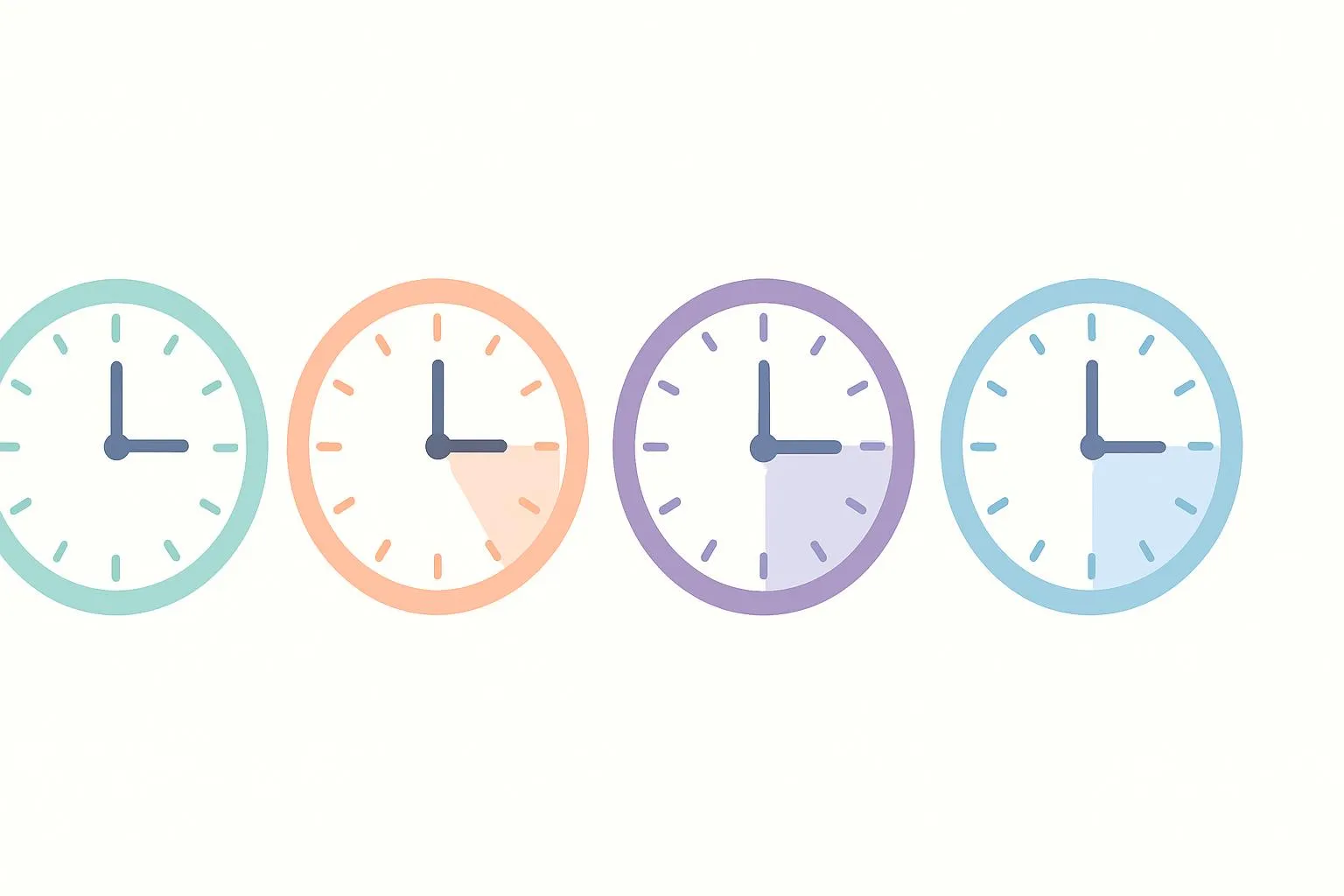
Side-by-Side Display:
- Show 3:15 and 3:45 simultaneously
- Compare hand positions
- Discuss similarities and differences
- Practice distinguishing between them
Quarter Hour Timeline:
- Create visual showing: :00 → :15 → :30 → :45 → :00
- Label each: o'clock, quarter past, half past, quarter to, o'clock
- Show progression through one complete hour
Common Challenges and Solutions
Challenge 1: Confusing :15 and :45
Signs: Student reads 3:15 as 3:45 or vice versa
Solutions:
- Emphasize minute hand position: "3 is on the right, 9 is on the left"
- Use color coding: green for :15, yellow for :45
- Practice identifying minute hand position before reading time
- Create reference poster showing both positions clearly
Challenge 2: Hour Hand Position Confusion
Signs: Reading 2:45 as 3:45 because hour hand is close to 3
Solutions:
- Review: "The hour hand hasn't reached 3 yet"
- Show progression: hour hand moves gradually through the hour
- Practice with times near the hour (:45, :50, :55)
- Use demonstration clock to show movement
Challenge 3: "Quarter To" Language Confusion
Signs: Saying "quarter to 2" for 2:45 instead of "quarter to 3"
Solutions:
- Simplify: Use digital format primarily
- Visual aid: Arrow pointing to next hour
- Practice: "What hour comes after 2?" (3)
- Make it optional for struggling learners
Systematic Teaching Progression
Week 1: Quarter Past Introduction
- Day 1-2: Introduce concept, show examples
- Day 3-4: Practice reading quarter past times
- Day 5: Assessment and review
Week 2: Quarter Past Mastery
- Day 1-2: Mixed practice (whole hours, half hours, quarter past)
- Day 3-4: Drawing hands for quarter past times
- Day 5: Games and activities
Week 3: Quarter To Introduction
- Day 1-2: Introduce concept, show examples
- Day 3-4: Practice reading quarter to times
- Day 5: Compare quarter past and quarter to
Week 4: Integration and Mastery
- Day 1-2: Mixed practice (all learned times)
- Day 3-4: Real-world applications
- Day 5: Assessment
Assessment Strategies
Formative Assessment:
Quick Checks:
- Show clock, ask "What time is it?"
- Say time, student draws hands
- Match analog to digital times
- Identify quarter past vs. quarter to
Mastery Indicators:
Student has mastered quarter hours when they can:
- Read :15 times with 90%+ accuracy
- Read :45 times with 90%+ accuracy
- Draw hands correctly for both
- Distinguish between :15 and :45
- Convert between formats (analog/digital/words)
Differentiation Strategies
For Struggling Learners:
- Focus on digital format only initially
- Extend practice time (6-8 weeks instead of 4)
- Use heavily scaffolded worksheets
- Provide labeled reference clocks
- Skip "quarter to" language if too confusing
- Practice with larger, clearer clock faces
For Advanced Learners:
- Introduce both quarter times simultaneously
- Add "quarter to" language earlier
- Include word problems with quarter hours
- Practice elapsed time with quarter hours
- Challenge with times like 12:15 and 12:45
Real-World Connections
Make quarter hours relevant by connecting to daily life:
- School Schedule: "Recess starts at quarter past 10"
- TV Shows: "Your show starts at quarter to 4"
- Appointments: "Dentist appointment at 2:15"
- Sports: "Basketball practice ends at quarter to 5"
- Family Routines: "Dinner is at quarter past 6"
Parent Support Materials
Letter to Parents:
"We're learning quarter hours! Your child is practicing times like 3:15 (quarter past 3) and 3:45 (quarter to 4). You can help by: 1) Pointing out quarter hour times on clocks at home, 2) Using quarter hour language naturally ('We'll leave at quarter past 2'), 3) Practicing with the worksheets we send home. This is a big step in time-telling!"
Conclusion: Building Quarter Hour Mastery
Quarter hours represent a significant milestone in time-telling development. By following a systematic approach, using clear visual aids, and providing ample practice, you can help students master this important skill.
Key Takeaways:
- Quarter past (15 minutes) is typically easier than quarter to (45 minutes)
- Visual aids showing clock divisions are essential
- "Quarter to" language is challenging—make it optional for young learners
- Systematic progression prevents confusion
- Real-world connections increase relevance and retention
Your Action Plan:
- Ensure students have mastered prerequisites
- Teach quarter past first, master it completely
- Introduce quarter to with clear visual supports
- Practice distinguishing between :15 and :45
- Use varied activities and our worksheet generator
- Assess mastery before moving to 5-minute intervals
Recommended Reading
- Time and Fractions: Making the Mathematical Connection
- The 5-Minute Increment Method
- 2nd Grade Time Worksheets: Half Hour Mastery
- 📖 Complete Teaching Guide: How to Teach Children to Tell Time
Ready to teach quarter hours? Generate targeted practice worksheets with our free tool and help your students master this critical time-telling skill!